


News

On April 14, 2026, ADW officially held a product launch event to unveil its system-level thermal management solutions designed for AI computing infrastructure and embodied intelligence. Simultaneously, the company announced its "O+X" strategic upgrade, marking ADW's official entry into the high-growth, multi-billion-dollar thermal management market for AI and robotics.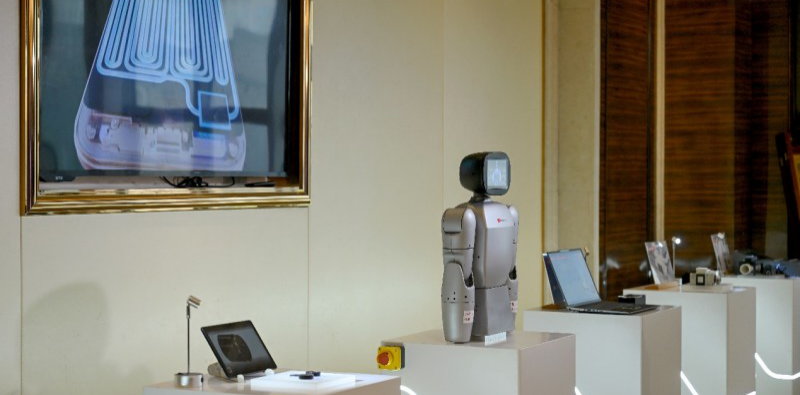
Three Core Products Precision-Targeting Thermal Pain Points
The event featured the launch of three flagship products: Dedicated Liquid Cooling Flow Sensors for AI Servers, Piezoelectric Liquid Pumps, and Micro Jet Fans. These products are specifically engineered to address the critical thermal challenges of computing servers, high-performance chips, and robotic joints, respectively.
Dedicated Liquid Cooling Flow Sensor for AI Servers: The "Sentry" of Liquid Cooling Systems
With the widespread adoption of high-performance chips like the NVIDIA H100, it has become common for single-chip power consumption to exceed 700W. Traditional air cooling is hitting an efficiency bottleneck, and full liquid cooling technology is rapidly becoming the industry standard.
This sensor employs a dual-technology route of ultrasonic sensing and vortex shedding sensing. The vortex flow sensor features algorithms specifically optimized for bubble interference—a common issue in liquid cooling systems. Even under complex gas-liquid mixed conditions, it maintains a high measurement accuracy of ±3%. Coupled with a rapid response time of ≤1.5 seconds, it enables real-time monitoring of both main and branch line flow rates, ensuring that computing chips stay "cool" even under the stringent PUE (Power Usage Effectiveness) requirements of modern data centers.
Notably, the intelligence of this sensor is reflected in two dimensions:
l Edge Computing: Each sensor is equipped with its own MCU (Microprocessor Unit) embedded with an AI architecture.
l Bi-directional Data Flow: Data collected by the sensor is transmitted to the CPU or GPU; the newly trained algorithms can then be sent back to the sensor via OTA (Over-the-Air) updates, allowing the hardware to undergo continuous "evolution."
Piezoelectric Liquid Pump: Revolutionizing Traditional Cooling Power
Leveraging the inverse piezoelectric effect, ADW’s self-developed Piezoelectric Liquid Pump eliminates the traditional motor structure, shrinking the volume to just 7 × 7 × 1.4mm. With power consumption only 1/10 that of electromagnetic pumps, it achieves zero noise and zero electromagnetic interference. This provides a silent, interference-free miniature "cooling heart" for smart terminals equipped with high-end chips, such as smartphones, PCs, and AR/VR devices.
Miniature Jet Fan: Breaking the Thermal Bottleneck of Robotic Joints
Addressing the thermal challenges of embodied intelligent robots, ADW has developed the Miniature Jet Fan (MUAF). The internal space of humanoid robot joints is extremely restricted, and motors generate instantaneous high temperatures (reaching over 120°C–150°C) during explosive power output. Traditional centrifugal fans with bearings are highly prone to wear and failure under high-frequency vibrations.
ADW’s miniature jet fan fundamentally eliminates fan bearings, utilizing the high-frequency vibration of piezoelectric ceramics to generate a directional jet airflow for cooling. With a thickness of only 2.8mm and a weight of just 8.5g, the fan can generate a back pressure of up to 300Pa, rapidly cooling the interior of a joint from the danger zone down to a safe operating zone of 60°C. Through future structural and process innovations, this technology is expected to achieve a "maintenance-free for life" cooling system, providing a robust guarantee for the long-term stable operation of robots.
System-Level Solutions: Building an "Intelligent Heat Extraction + Transfer + Dissipation" Thermal Management Ecosystem
Facing the systemic challenges posed by chip heat flux densities approaching physical limits and the accelerated deployment of humanoid robots, ADW has leveraged over twenty years of expertise in sensing and actuation technology. By combining "Perception (Sensors) + Execution (Actuators)," the company has constructed a sophisticated, intelligent thermal management system focused on "Heat Extraction, Heat Transfer, and Heat Dissipation."
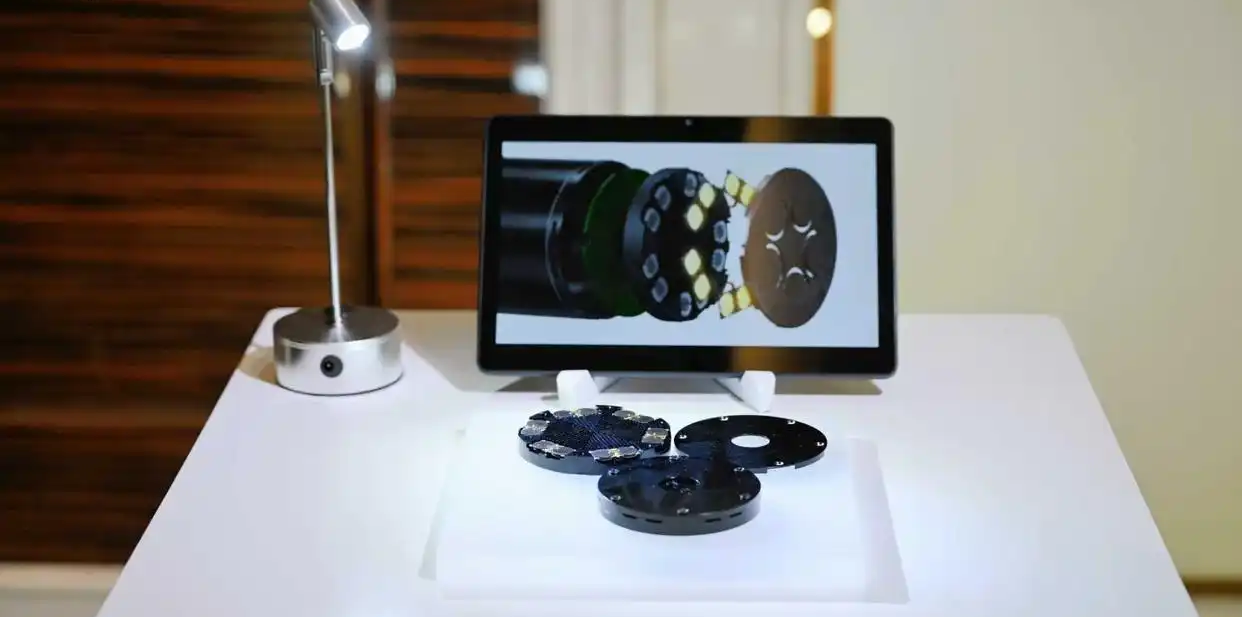
Official Launch of the "O+X" Strategy: Embracing Infinite Possibilities in the AI Era
During the launch event, ADW also officially announced its "O+X" strategic upgrade for the era of AI and embodied intelligence. In this framework, "O" (Original) represents ADW's traditional stronghold in business sectors such as intelligent vehicles, smart homes, intelligent terminals, and smart manufacturing. Meanwhile, "X" (Extension) signifies the company's expansion and diversification into core foundational hardware for AI infrastructure and embodied intelligence.
An ADW representative stated at the conference: "As AI continues to evolve, the market demand for sensors and actuators will enter a long-term growth trajectory. ADW will focus on the core requirements of the perception and execution layers of Strong AI, strengthening our systemic competitiveness across R&D, capital, and production capacity."
He further explained that the development of AI will progress through three stages: the enhancement of algorithms and computing power, the popularization of intelligent assistants and embodied intelligence, and finally, the digitalization of physical space. ADW is developing sensors along this evolutionary roadmap: the current focus is on computing power scenarios, the next step is embodied intelligence, and the following step is spatial intelligence.
A Multi-Billion Track Begins: Far-Reaching Significance
According to forecasts by Frost & Sullivan, the global thermal management solutions market is expected to surpass 400 billion yuan by 2029, with a compound annual growth rate (CAGR) exceeding 20%. This release not only marks ADW's official entry into the multi-billion-dollar AI and embodied intelligence thermal track but also signals the company's strategic transformation from a sensor and actuator manufacturer to a core hardware provider for AI and embodied intelligence.
This represents a major breakthrough for sensor enterprises in the construction of the AI physical layer infrastructure. In the future, ADW will continue to focus on the core requirements surrounding Strong AI, utilizing sensing and actuation technologies to build the foundational hardware of the AI era, and contributing to the global development of AI infrastructure and the embodied intelligence industry.
 Come Back